Your sump pump only matters when it rains hard — which is exactly when you find out it isn't working. We repair and replace sump pumps so your basement stays dry. Licensed, flat-rate, no runaround.
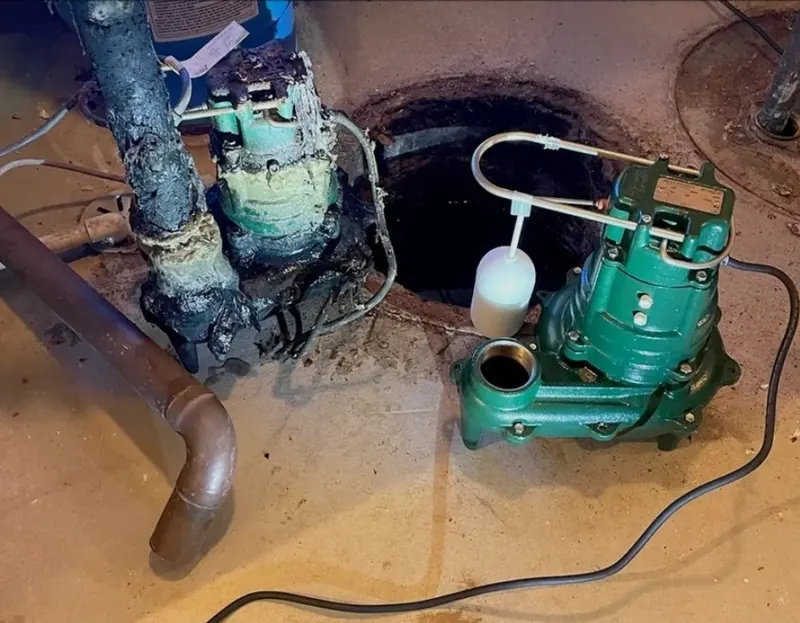
A pump that won't shut off, or never kicks on, often has a stuck float switch or a failed motor.
Grinding, rattling, or loud humming can mean a worn impeller or debris in the pit.
Any water near the pit after a storm means the system didn't keep up — get it checked before the next one.
We check the pump, float switch, check valve, discharge line, and the pit itself.
Some problems are a simple fix; an older or failed pump is usually better replaced. You get a flat-rate quote either way.
We fill the pit and confirm the pump starts, empties it, and shuts off properly.
We install backup sump pumps for extra protection, and we install new sump pits or replace damaged ones.
A backup pump takes over when the main pump fails, can't keep up, or loses power. These are the three common setups.
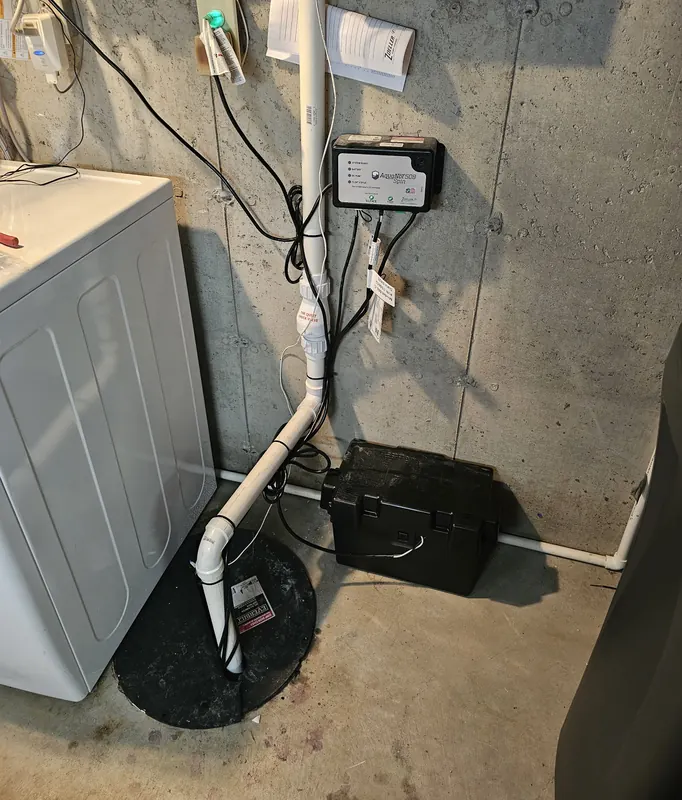
A second pump runs off a deep-cycle battery when the power goes out or the primary pump stops.
Pros: keeps working during a power outage; doesn't depend on water pressure; most include an alarm.
Cons: runs only as long as the battery charge lasts; the battery needs periodic checks and replacement every few years; usually pumps less than the primary.
Uses the pressure of your municipal water supply to draw water out of the pit, with no electricity or battery.
Pros: no battery to maintain; keeps running as long as city water pressure holds.
Cons: needs municipal water with adequate pressure, so it won't work on a private well; uses city water while it runs, which shows up on your water bill; requires backflow protection to meet code; generally moves less water than an electric pump.
A primary pump and a battery backup pump come pre-assembled as one unit, usually with a shared controller and alarm.
Pros: both pumps are designed to work together; one compact install in a single pit; one controller monitors the whole system.
Cons: higher upfront cost; the pit has to be large enough for both pumps; the backup side still depends on battery charge.
We'll recommend the right setup for your pit, your water service, and how often your pump runs.
Slowly pour a bucket of water into the pit. The pump should start, empty it, and shut off. If it doesn't, or you hear grinding, call us during business hours. Also make sure the discharge line outside isn't blocked or frozen.
Licensed and insured: Ohio Plumbing Contractor License #50644, Indiana Plumbing Contractor License #PC12400229, full liability and workers' comp coverage. All labor carries a 1-year warranty.

A stuck float switch, a failed check valve letting water fall back, or a pump too small for the water coming in can all keep it running. We find the cause and fix or replace what's needed.
A standard pump stops without power. A battery backup pump can keep the pit from overflowing until power returns.
It varies with how often it runs and the pump's quality. If yours is old, noisy, or running constantly, have it inspected before it fails during a storm.
A stuck float or a failed check valve can often be repaired. If the motor is failing or the pump is old, replacement is usually the better value. We'll give you an honest recommendation.
Call during our posted hours — Mon–Fri 8am–7pm, Sat 9am–1pm. If water is rising, move valuables up, keep clear of any water near electrical outlets or equipment, and call your electric utility if needed.
We serve Greater Cincinnati, including Hamilton, Butler, Warren, and Clermont Counties in Ohio, plus Dearborn County in Indiana. Call 513-540-4575 to check your address.
Dealing with more than one issue? We also handle:
Call for a free estimate or request a quote online — Mon–Fri 8am–7pm, Sat 9am–1pm.